From Llwchwr to Kidwelly: A New Year’s Day That Changed Welsh History
On New Year’s Day 1136, on the open land between Loughor and Swansea, a battle was fought that would echo far beyond the Gower peninsula. The Battle of Llwchwr was not only a Welsh victory over Norman forces, but the spark that lit a wider rebellion across South Wales—one that would lead directly to the courageous and tragic stand of Gwenllian at Kidwelly.
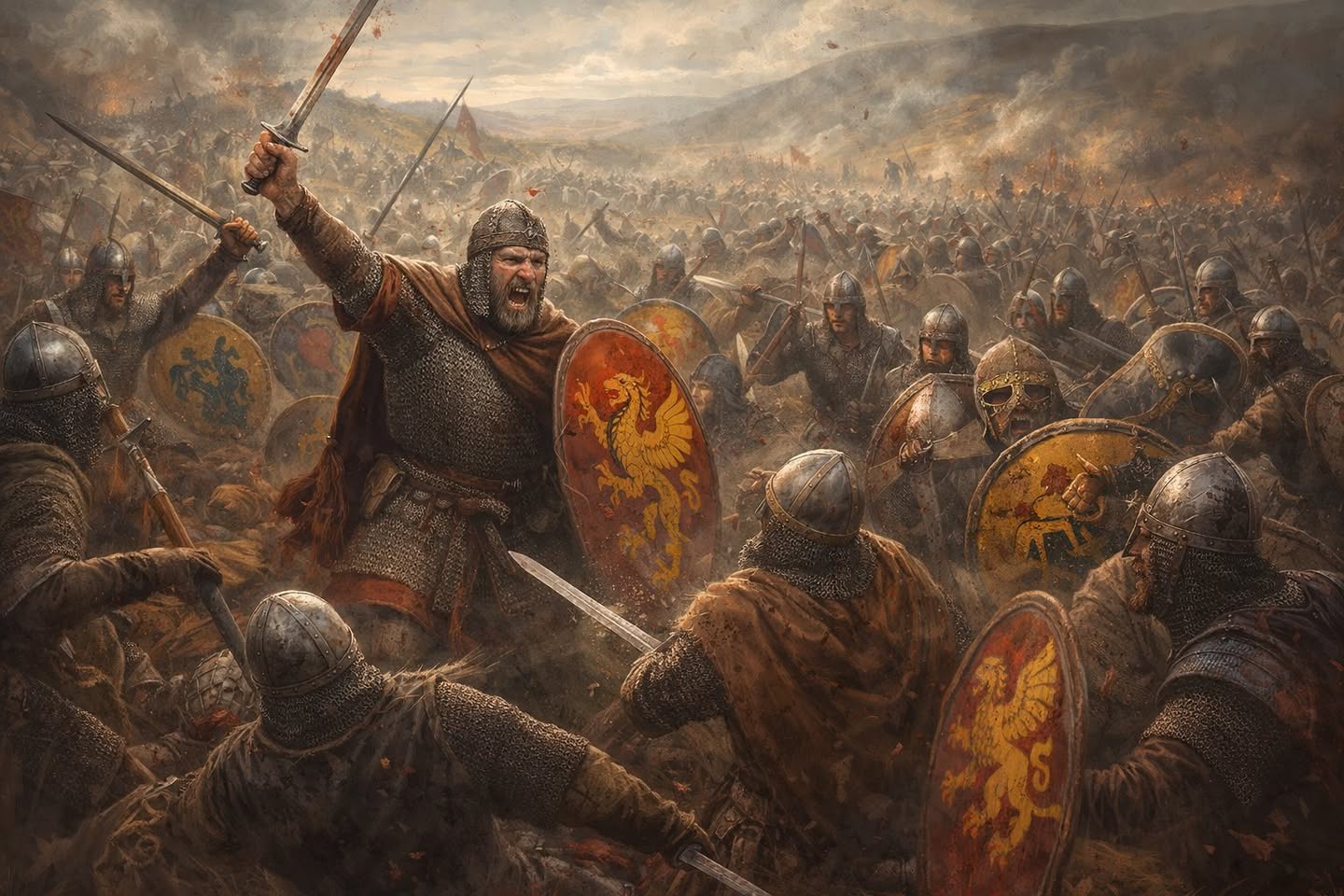
At the time, Norman castles dominated much of the landscape of South Wales, standing as powerful symbols of conquest and control. Yet across Wales, resentment simmered. The death of King Henry I of England in 1135 plunged England into chaos. His successor, Stephen de Blois, seized the throne from Henry’s daughter, Matilda, triggering a bitter civil war remembered as The Anarchy. With Norman authority weakened, Welsh rulers recognised a rare chance to reclaim their lands.
One such leader was Hywel ap Maredudd of Brycheiniog. Early in 1136, he raised an army and marched into South Gower. When a Norman force moved to intercept him at Garn Coch, they were caught off guard by the size and determination of the Welsh host. The clash was fierce and bloody, but it ended in a decisive Welsh victory. Around 500 Norman soldiers are said to have been killed. For the people of the area, this was proof that Norman power was not invincible.
Word of the victory at Llwchwr spread quickly throughout Wales. Among those inspired was Gruffydd ap Rhys, lord of Deheubarth. Seeing an opportunity to unite Welsh resistance, he travelled north to seek the support of Gruffydd ap Cynan of Gwynedd. While he was away, leadership in Deheubarth fell to his wife, Gwenllian—a figure who still holds a powerful place in Welsh memory.
Encouraged by the success at Llwchwr, Gwenllian gathered an army and marched on the Norman castle at Kidwelly (Cydweli). Her decision reflects the new confidence felt across Wales in the wake of the New Year’s victory. Yet the assault ended in tragedy. Gwenllian was defeated, captured, and beheaded. Two of her sons, Morgan and Maelgwyn, also lost their lives—one killed in the fighting, the other executed after capture.
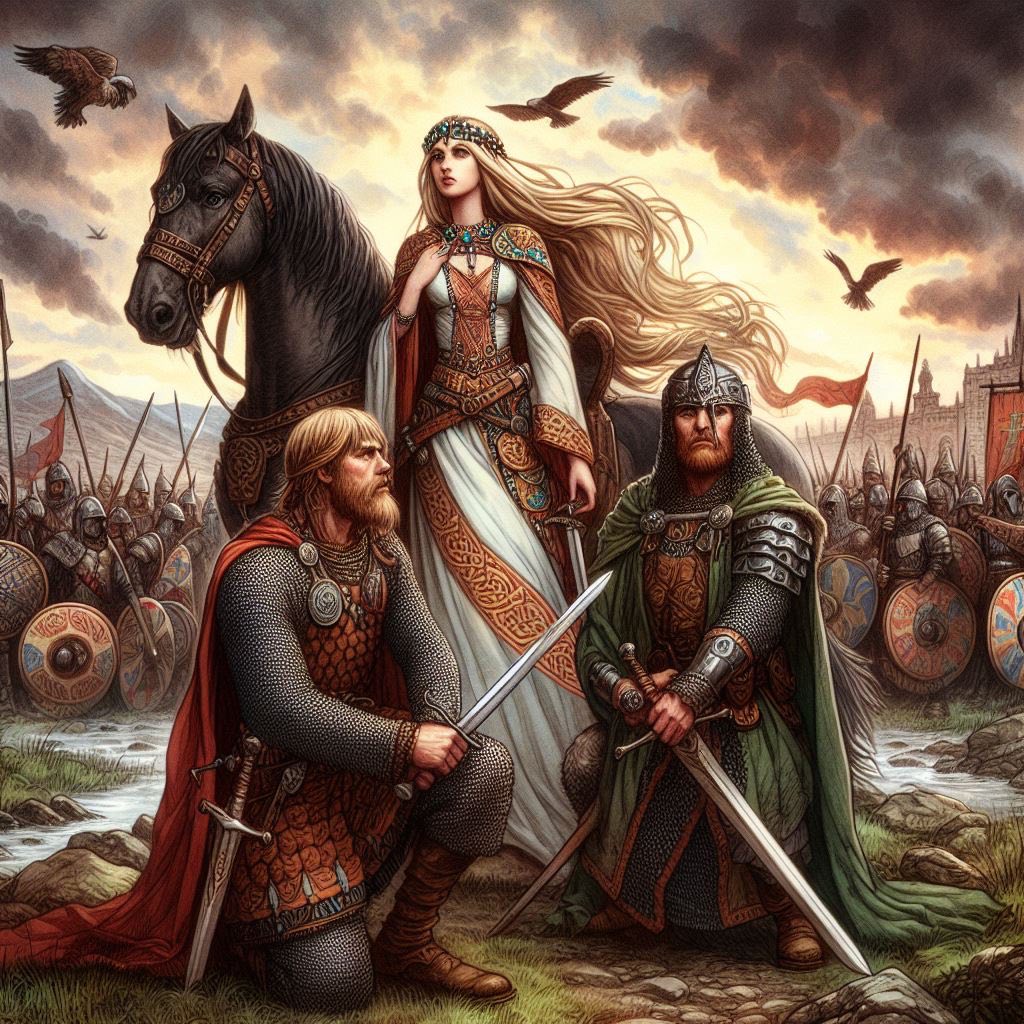
Rather than silencing resistance, Gwenllian’s death hardened Welsh resolve. Her brothers, Cadwaladr and Owain, led retaliatory campaigns across Deheubarth, capturing settlements such as Llanfihangel, Aberystwyth, and Llanbadarn. Later that year, Welsh forces met a large Norman army at Crug Mawr, just outside Cardigan. After heavy fighting, the Normans were driven back toward the River Teifi. As they fled, the bridge collapsed beneath them, and many drowned. Cardigan town was taken and burned, though its castle remained in Norman hands.
Today, the fields of Garn Coch, the walls of Kidwelly Castle, and the crossing of the Teifi are quiet places. Yet they are part of a shared landscape shaped by resistance, loss, and determination. The victory at Llwchwr gave hope to a people under pressure, inspired Gwenllian’s stand at Kidwelly, and helped ignite one of the most important Welsh uprisings of the medieval period.
Remembering these events is not only about battles and leaders, but about the communities who lived on this land and the courage they found in a moment of opportunity. New Year’s Day 1136 was not just the start of a year—it was the beginning of a renewed Welsh struggle for independence.