A comment left by Non Davies on the Kidwelly Local History Society Facebook page in relation to the Kidwelly Tinworks sparked further investigation—this time into the often-overlooked role of women in the tinplate industry. What began as a simple reply soon opened the door to a fascinating story about the women who worked in and around the tinplate works, their contributions, and the vital part they played in the life of the industry and the community. What follows reveals an intriguing glimpse into a side of industrial history that is too rarely told.
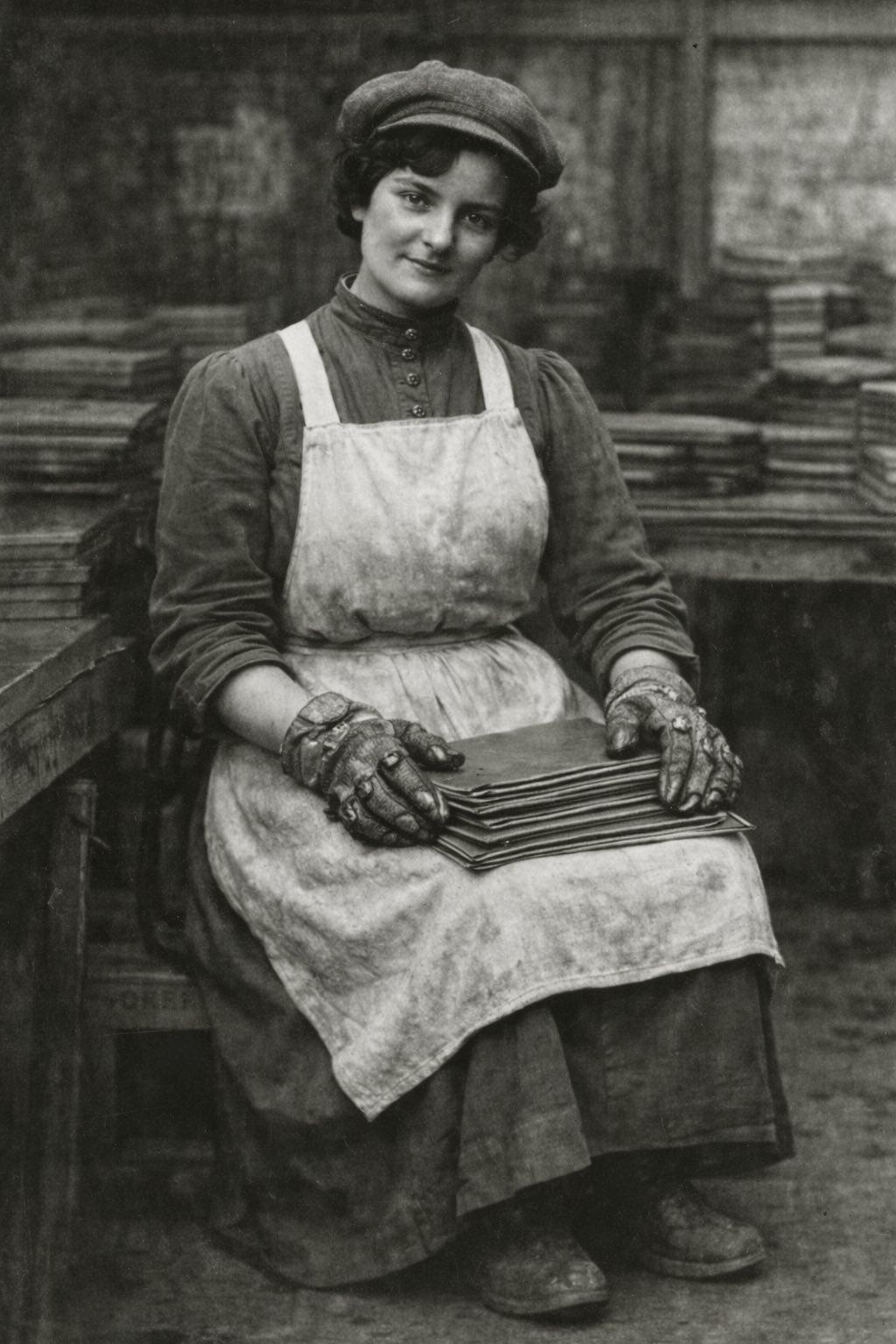
Women of the Kidwelly Tinplate Works
In the late 19th and early 20th century, the tinplate industry was often seen as a man’s world, yet women played an important and skilled role at the works in Kidwelly Tinplate Works.
By 1881, records show that 35 women were employed there, working mainly as “openers.” Their job was both skilled and dangerous. After sheets of tinplate were rolled, the thin metal plates would stick together. The women carefully separated the sharp sheets, checked their quality, and prepared them for the next stage of production. Handling the metal required precision and toughness, as the edges were extremely sharp.
Photographs from the “Tin House” show these workers wearing practical clothing suited to the harsh environment:
• High-buttoned blouses
• Long skirts
• Sturdy shoes or clogs
• White linen aprons
• Flat caps
To help with their work, they often used gloves or mittens fitted with small pieces of lead, which helped them grip and separate the plates more easily.
Despite these protective measures, the work remained difficult and physically demanding. An anecdote shared by Non Davies adds a human touch to this history. She recalled that the women working at the tinworks would sometimes visit her grandmother—who was a dressmaker and tailor—to ask for scraps of fabric. They used the material to wrap their hands for extra protection from the razor-sharp tin sheets, especially when proper gloves were unavailable.
Their contribution is remembered through exhibits and educational materials at the Kidwelly Industrial Museum, where the story of the town’s tinplate industry—and the hardworking women who helped power it—when the museum reopens their endeavours can seen and shared to a wider audience.
These women were not just factory workers; they were part of the industrial backbone of Kidwelly, demonstrating resilience and skill in one of Wales’s most important historic industries.
Artistic impression of a woman tinplate worker described in the article – Garry Smith, article created by Garry Smith.