Francis Dunn and the Arctic Medal
More research has been made into the Kidwelly born man who perished on one of the most tragic voyages in British naval history is being remembered for his service and sacrifice in the ill-fated Franklin Expedition.(Facebook post April 8th)
Francis Dunn was born on March 4, 1821, in Kidwelly to Francis and Mary Dunn, who lived on Bower Street which is now Water Street. His father worked as a ship’s carpenter, likely in one of the town’s busy shipyards. By the time of the 1841 census, the family had moved to Llanelli, living in modest accommodation in the seaside area. Both father and son were recorded as shipwrights, reflecting a strong family connection to maritime life.
It was perhaps inevitable that the younger Dunn would take to the sea. His Royal Navy service record shows that he joined in Malta on October 6, 1843. He initially served aboard the 36-gun frigate HMS Belvidera as a carpenter. Demonstrating rapid progress in his naval career, Dunn was appointed Caulker’s Mate aboard HMS Erebus on March 27, 1845, joining Sir John Franklin’s ambitious expedition to chart the Northwest Passage. At just 24 years old and with less than eighteen months of naval service, Dunn had already risen to the rank of petty officer.
The Franklin Expedition would end in disaster. All 129 men aboard HMS Erebus and HMS Terror were lost in the Arctic, and like most of the crew, Dunn’s final fate remains unknown. His body was never recovered.
Following the Admiralty’s declaration that the expedition was lost with all hands, Dunn’s family received payment of his outstanding wages. It is believed this money may have been used to establish a public house in Llanelli, The Whitehall Vaults, later known as Barnums.
Despite the tragedy, the Dunn family’s maritime legacy continued. Francis’s younger brother, Richard, pursued a successful career at sea. By 1881, he was skipper of the Llanelli-built sailing ship Gem of the Sea. When he died in 1900 at the age of 71, he was known as Captain Richard Dunn of Glanmor Place. In a poignant tribute, Richard named his first son Francis, though the boy chose a different path, becoming a signal clerk and telegraphist.
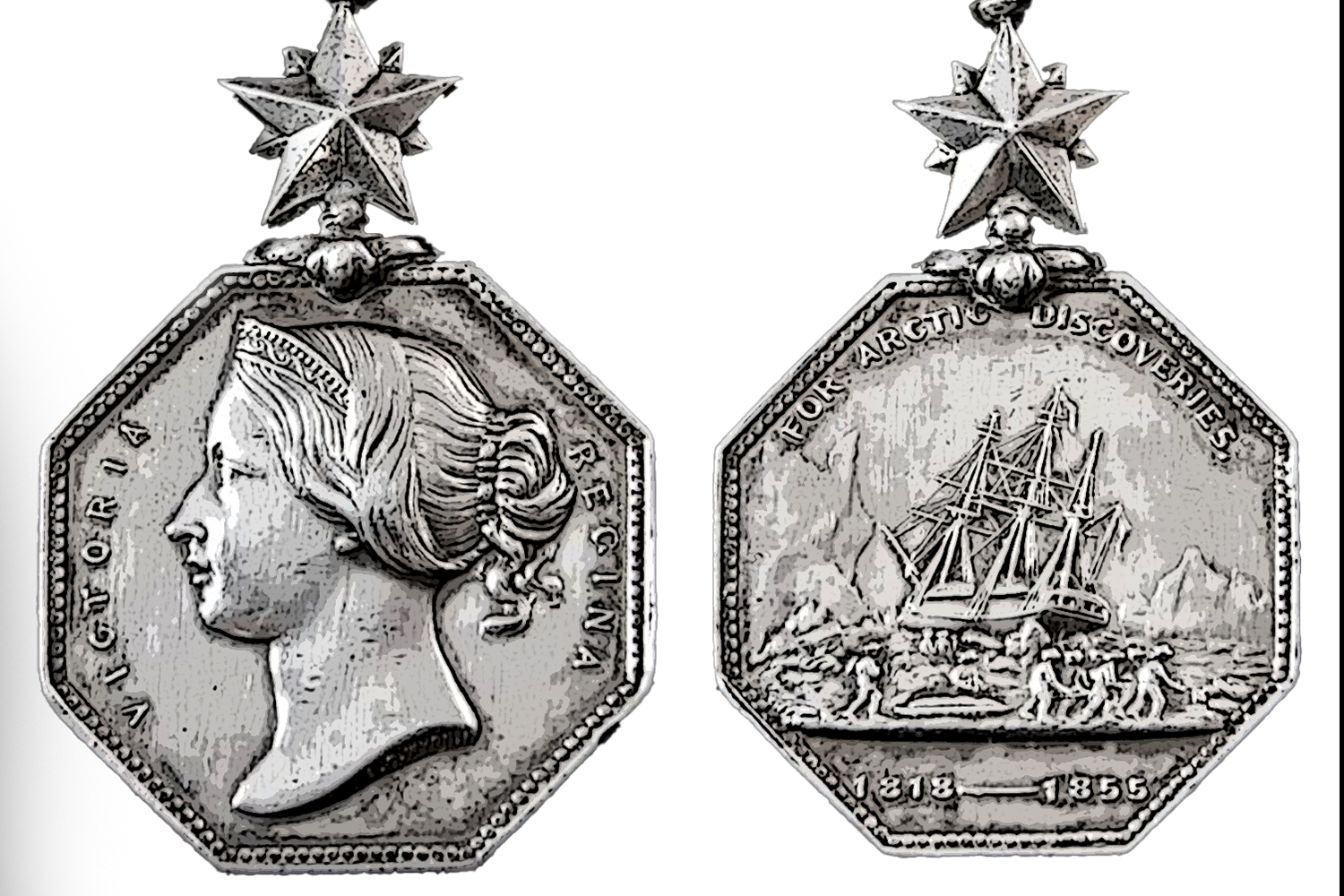
In recognition of his service, Francis Dunn was posthumously awarded the Arctic Medal for his role in the expedition. Families of the lost crew were required to apply and prove their connection to receive the medal, though it remains unclear whether Dunn’s family ever did so. If they did, the medal’s current whereabouts are unknown.
Today, the memory of the Franklin Expedition endures through various memorials. In the Arctic, a large cairn and plaques stand on Beechey Island, erected by search parties. In Britain, a prominent statue of Sir John Franklin in London’s Waterloo Place commemorates the expedition and its crew, alongside memorials in churches such as the Old Royal Naval College.
Closer to home, Dunn’s connection to Llanelli was formally recognised on June 29, 2019, when a Blue Plaque was unveiled in his honour by Trystren Gravell and Bret Jones sited at Glanmor Road, Llanelli.
Though the Arctic still guards the full story of his final days, Francis Dunn’s journey from a Welsh shipwright’s son to a Royal Navy petty officer remains a powerful testament to the seafaring heritage of Llanelli and the enduring human cost of exploration.
(Article created by Garry Smith)