Francis Dunn of Kidwelly: A Forgotten Sailor of the Franklin Expedition
In the late nineteenth century, long after the tragic fate of Sir John Franklin’s Arctic voyage had become one of the most haunting mysteries of British exploration, small local newspapers continued to uncover the personal stories of the men who sailed into the frozen north. One such story appeared in the Western Mail on 21 November 1892, highlighting the life of a little-known participant in the ill-fated expedition: Francis Dunn, a native of Kidwelly in Carmarthenshire, Wales.
At the time, many accounts incorrectly identified Dunn as being from Llanelly (modern-day Llanelli). However, local representatives from Kidwelly clarified that both Francis Dunn and his father were in fact born in the historic town. Dunn himself first saw the world on Castle Bailey Street in Kidwelly and lived there until he was about eighteen years old.
Life in the small Welsh borough offered limited opportunities. Work was scarce, and eventually Dunn’s father moved the family to Llanelly in search of employment. Before leaving Kidwelly, however, the young Francis had already begun working as a servant for Dr. Williams of Arlais, a residence in the town. His mother was originally from Llanstephan, another community along the Carmarthenshire coast.
Despite his humble beginnings, Dunn’s path would eventually lead far beyond the shores of Wales. Several of Kidwelly’s older residents later recalled the day he departed the town to pursue a maritime career. He left by mail coach, traveling to join the naval vessel Erebus, one of the ships assigned to the ambitious Arctic expedition commanded by Sir John Franklin.
Franklin’s expedition, launched in 1845, aimed to chart the remaining unknown sections of the Northwest Passage through the Canadian Arctic. The ships Erebus and Terror, along with their crews of 129 officers and men, vanished after entering the ice-choked waters north of Canada. Over time, the voyage became one of the greatest mysteries in the history of polar exploration.
For Dunn, as for the rest of the crew, the journey ended in tragedy. None of the expedition members survived. Yet even decades later, the memory of those who left small towns and villages to join the voyage remained alive in local communities like Kidwelly.
The 1892 newspaper account also preserved a curious local legacy of Dunn’s connection to the expedition. Compensation money amounting to £250—granted by the government to the families of those lost—was reportedly used to construct a public house in Llanelly known as The White Ball. In this way, a piece of the Franklin story became woven into the everyday life of a Welsh town.
Today, while the grand narrative of the Franklin expedition often focuses on its commanders and the mystery of its disappearance, the life of Francis Dunn reminds us that the voyage was also made up of ordinary men. Sailors from places like Kidwelly carried their hopes, ambitions, and local histories with them when they sailed north into the Arctic—never to return, but never entirely forgotten either
TRAGEDY IN THE FROZEN NORTH: THE LOST FRANKLIN EXPEDITION
By Our Special Correspondent
London, late 19th-century style
In the summer of 1845, two stout vessels of the Royal Navy—HMS Erebus and HMS Terror—sailed proudly from England under the command of Sir John Franklin, bound for the unyielding waters of the Arctic. Their mission was ambitious and patriotic: to complete the discovery of the long-sought Northwest Passage, a sea route that promised to unite the Atlantic and Pacific Oceans and secure Britain’s dominance in global trade and exploration.
The expedition carried 129 officers and men, well supplied with the latest achievements of modern science, including steam engines and tinned provisions believed to guarantee endurance against the harshest conditions. Confidence was high. The ships were last seen by whalers in Baffin Bay in July of that year—and then vanished into the ice.
⸻
Silence and Alarm
When no word reached Britain after several years, concern turned to alarm. Lady Jane Franklin, wife of the commander, pressed the Admiralty relentlessly, and soon the greatest search effort the Arctic had ever known was underway. Dozens of expeditions scoured the frozen seas, uncovering fragments of a terrible truth.
In 1859, a written note was found at Victory Point on King William Island. It revealed that Sir John Franklin had died in June 1847, and that by April 1848 the surviving crew had abandoned their ice-bound ships, attempting a desperate march southward. None were ever found alive.
⸻
The Inuit Testimony
Crucial insight into the expedition’s fate came not from Britain, but from the Inuit people, who had lived and traveled in the Arctic for generations. Inuit hunters told searchers of seeing white men dragging boats across the ice, thin, exhausted, and clearly unprepared for survival on the land.
They spoke of a large ship crushed by ice, and of bodies found along the coast and inland routes—some buried, others left where they fell. Most disturbingly, Inuit accounts described evidence that the last survivors, driven beyond endurance by hunger, had resorted to cannibalism. For many years, such reports were dismissed in Britain as unthinkable or exaggerated. Yet later archaeological discoveries have tragically confirmed their accuracy.
The Inuit also described metal goods traded or recovered from the expedition—silverware, tools, and wood—silent remnants of lives lost far from home. Their testimony, once doubted, has proven indispensable in reconstructing the final movements of Franklin’s men.
⸻
Causes of the Catastrophe
Modern examination of remains and supplies has revealed that the men suffered from a deadly combination of starvation, scurvy, extreme cold, and likely lead poisoning, possibly caused by poorly sealed canned food or the ships’ water systems. The very technologies meant to protect them may have hastened their demise.
Equally fatal was the expedition’s failure to adopt Inuit survival practices, such as reliance on fresh meat, fur clothing, and efficient travel over ice—knowledge refined through centuries of Arctic life.
⸻
A Legacy in Ice
Though the Franklin expedition ended in disaster, its legacy endures. The searches it inspired helped map vast regions of the Canadian Arctic, and the story remains one of the most haunting in the annals of exploration.
In a final chapter written more than a century later, the lost ships themselves were found: HMS Erebus in 2014, and HMS Terror in 2016, preserved beneath the icy waters, as if still waiting for rescue.
The Franklin expedition stands as both a testament to human ambition and a solemn warning—of nature’s power, of cultural arrogance, and of the cost of ignoring the wisdom of those who know the land best.
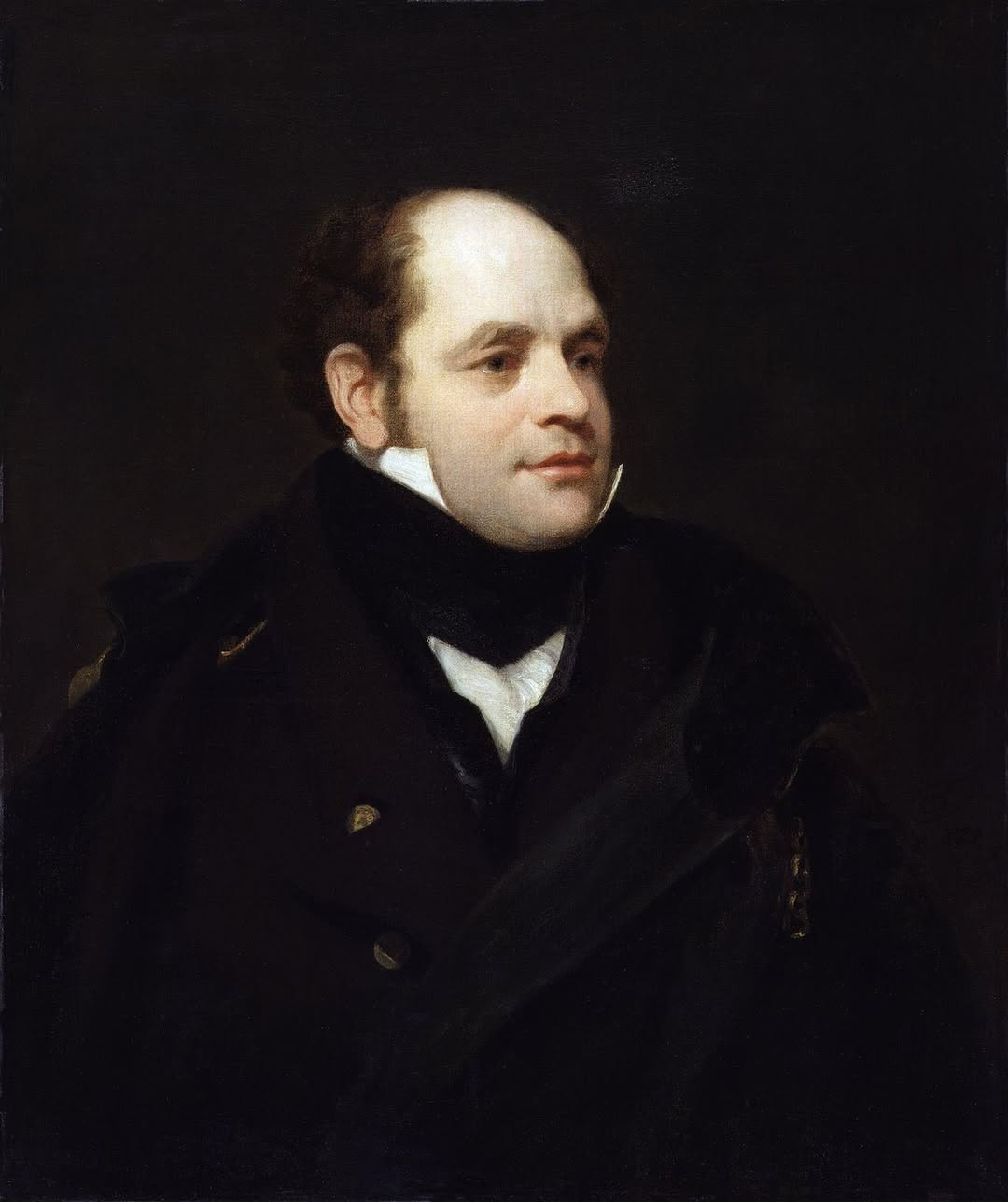
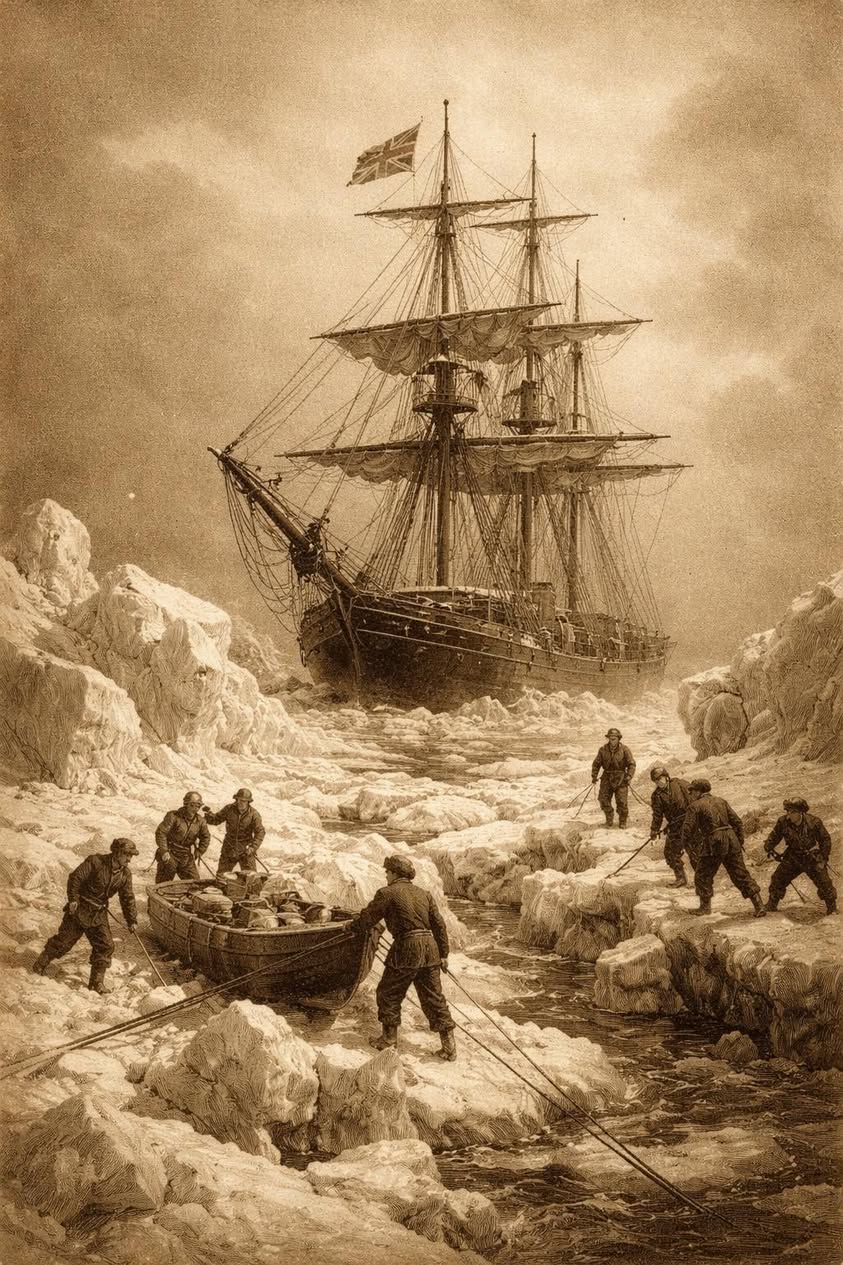
(Article created by Garry Smith, images: an artistic impression of one of the expedition ships stuck fast in the ice, portrait of Sir John Franklin.)