A KIDWELLY MAN ON THE VICTORY AT TRAFALGAR.
In the “Alcwyn Evans’ Collection” of antiquities, etc., now in the possession of his son-in-law, Mr. E. J. Waters, St. Catherine Street, Carmarthen, is the following highly interesting and instructive letter, written by one of the crew of the “Victory” to his parents at Kidwelly. It is in a good state of preservation, and addressed to “Mr. David Johns, seaman, Kidwelly, Carmarthenshire, South Wales”:—
H.M. Ship Victory, Spithead,
Dec. 3rd, 1805.
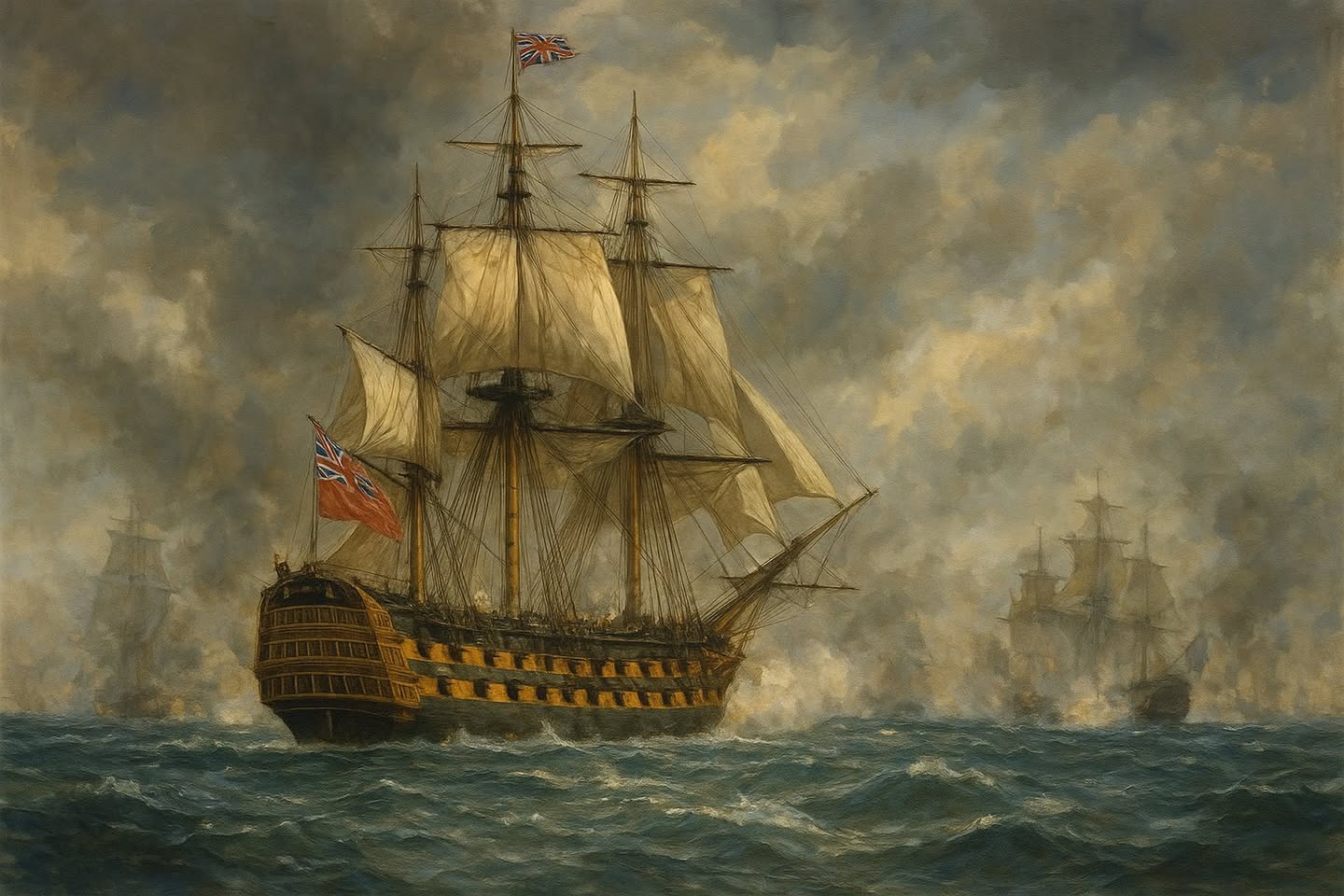
Honoured Father and Mother,—I am happy to embrace this opportunity of writing to you when I think of my late escape, and the glorious defeat of our enemies. But there is no doubt that you will be better informed by the newspapers. But I shall inform you of some particulars respecting our own ship and a few others. October 21st in the morning saw the enemy very near to us, drawn in a line, with their larboard tacks on board close to Cape Trafalgar, near Cadiz. We had our quarters clear and bore down on them, they being in three divisions, but not close together. The first ship come into action was the Royal Sovereign and cut off the 12th or 14th ship from the rear, and the Victory cut off do. from the van, which proved to be the Santissima Trinidad, a 4 decker of 160 brass guns. The Spanish commander-in-chief, Admiral Gordina, had his flag on board her. She fired into our bows, and 7 ships besides her, 10 or 15 minutes before we returned it, which we did at last with effect on opening a tremendous fire on both sides in the midst of them, engaging the French and Spanish admirals one on each side. We was so involved in smoke and fire, not to be seen by any of our frigates looking on, for about half an hour, and they thought we was blown up or sunk, having no less than 5 ships on us at a time. But we were bravely seconded by the Temeraire, or we would have been sunk, it being the orders and intention to capture or sink Lord Nelson’s ship.
But, unfortunately for us, our brave and gallant commander, Lord Nelson, was wounded early in the action by a musket ball passing through his shoulder, breast, and lungs, and lodging in the spine. His loss will be ever lamented as the protector and preserver of his country by every Briton. He was shot out of the mizzen-top of the Redoubtable, a French 2 decker of 110 guns, who stuck to us. His death was soon avenged, for the person who shot him was dropped immediately after by one of our midshipmen. His lordship was carried down below, and often sent after his friend, Captain Hardy, before that gallant commander could leave the deck, still keeping the command of the action. When he went down he told Nelson two of the enemy had struck. He replied, Only twelve? He begged of him to preserve the victory that day, and on hearing the ship’s company cheering when some more ships had struck and the victory ours, he said he could die in peace, and expired without a groan. Every hero in the fleet shed a tear on hearing the news of his death.
The enemy had 44 sail in all, 35 of the line, 7 frigates, etc. We had 27 of the line, including three sixty-fours. We had 3 frigates. Admiral Lewis and five of the line left us 2 or 3 days before the action to go to Gibraltar to water. They had 7 admirals all killed, wounded, and taken prisoners. Five ships struck to the Victory. We have the —— on board and 8 ships’ colours. Out of all this mighty fleet only 10 has got into Cadiz, but so shattered that only 3 or 4 fit for repair. One blew up in action, one sank, 20 taken. But a heavy gale from the S.W. next morning drove several on shore, being mostly quite dismantled. Some were burnt, some scuttled. It was with difficulty we saved our own ships that was dismantled. We had fore and main mast standing, but very badly wounded, full of shot holes. But we made shift to fish them with topmasts, etc. The Belleisle lost all masts, Colossus do., Mars do., Africa do., Royal Sovereign do. These ships behaved gallantly, but some of our heavy ships had little to do in the action.
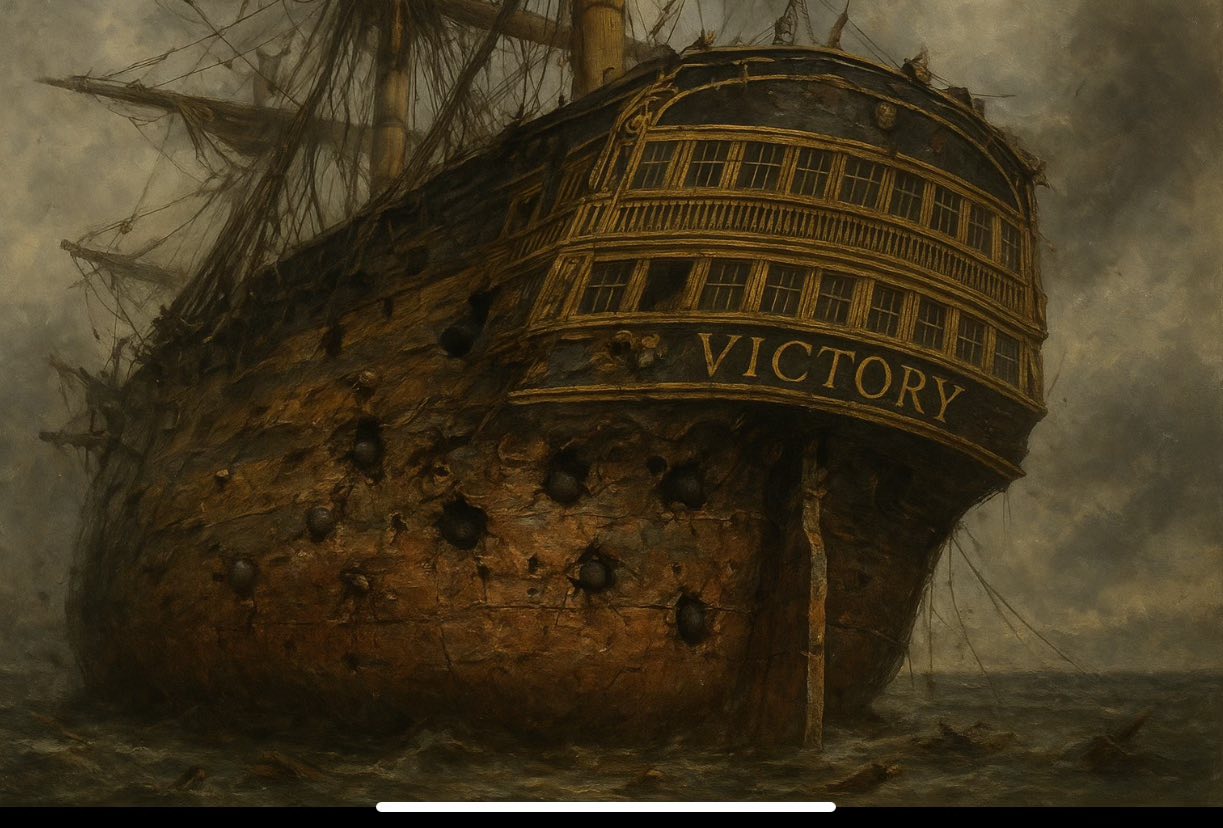
We had about 170 men killed and wounded, but I cannot inform you the loss of other ships, but it is reported the enemy had 20,000 men killed, wounded, and taken prisoners, 2 admirals killed, 3 wounded, 2 prisoners. We have about 100 shot sticking in our copper between wind and water, but none through, so, of course, we make no water.
I have heard since the true account of our killed and wounded, which is as follows, viz.: 40 seamen killed, 20 marines do., 7 officers do., and wounded in all 87. I believe our loss has been greater than any other ship in the fleet. I seen my brother George at Gibraltar, and John Evans in good health, bound to Lisbon. Should wish to hear from you when this comes to hand. Until then I remain your dutiful and affectionate son,
THOS. JOHNES.
P.S.—We have just arrived at Spithead, having been towed part of the way by the (ships name redacted) who was sent out of Plymouth for that purpose. We have been 31 days from Gibraltar.
Closing Remarks
A first-hand account of the Battle of Trafalgar is noteworthy in itself, but a narrative penned by a sailor from Kidwelly aboard HMS Victory elevates that significance to an entirely higher level. Thomas’s vivid description of the day’s events—combined with his reflections on the aftermath, the battered state of the Victory, and, of course, the death of his “brave and gallant commander Lord Nelson”—is exceptional. His letter also makes brief but valuable mention of his brother George and of John Evans, whom we may reasonably presume to have been another native of Kidwelly.
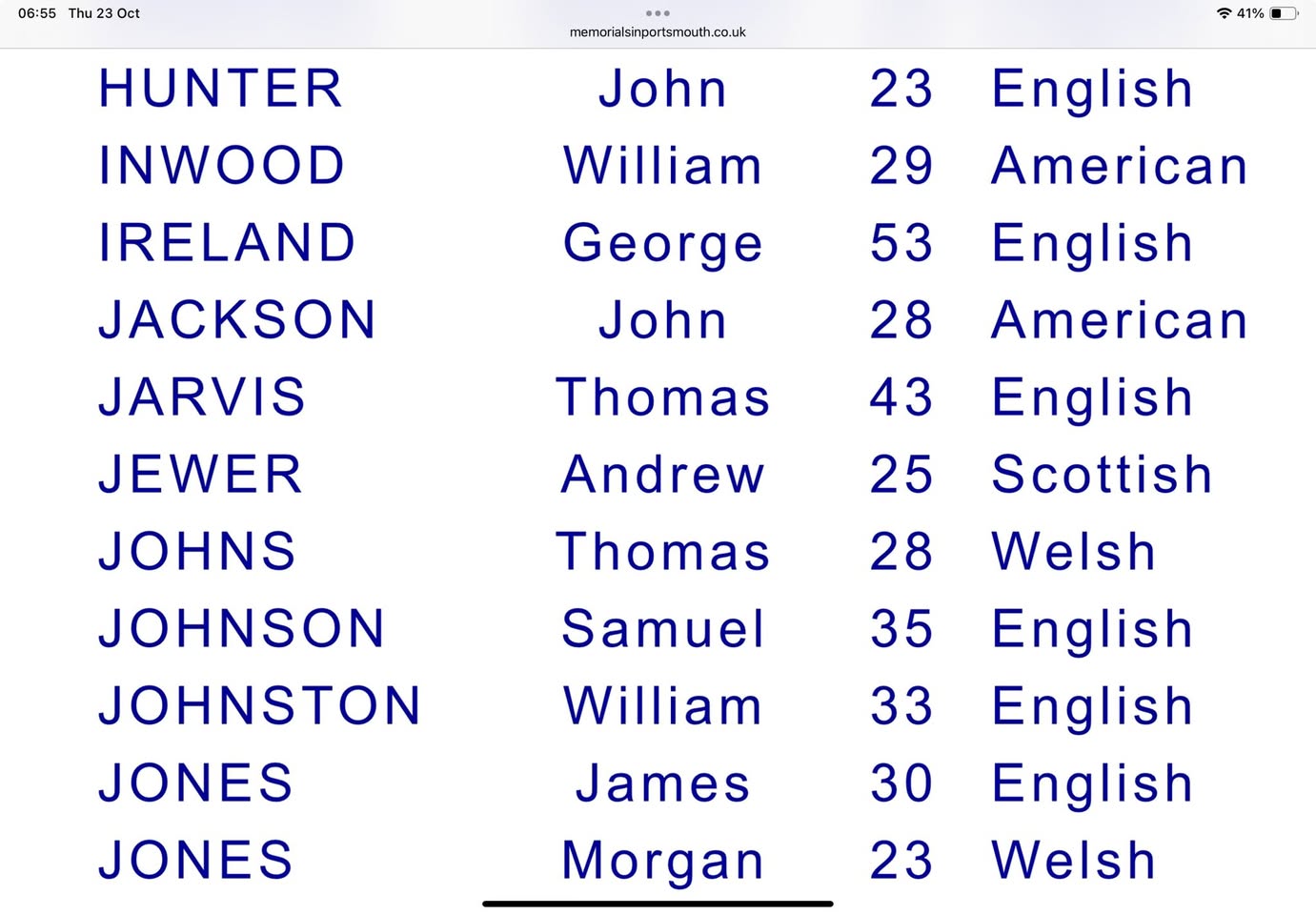
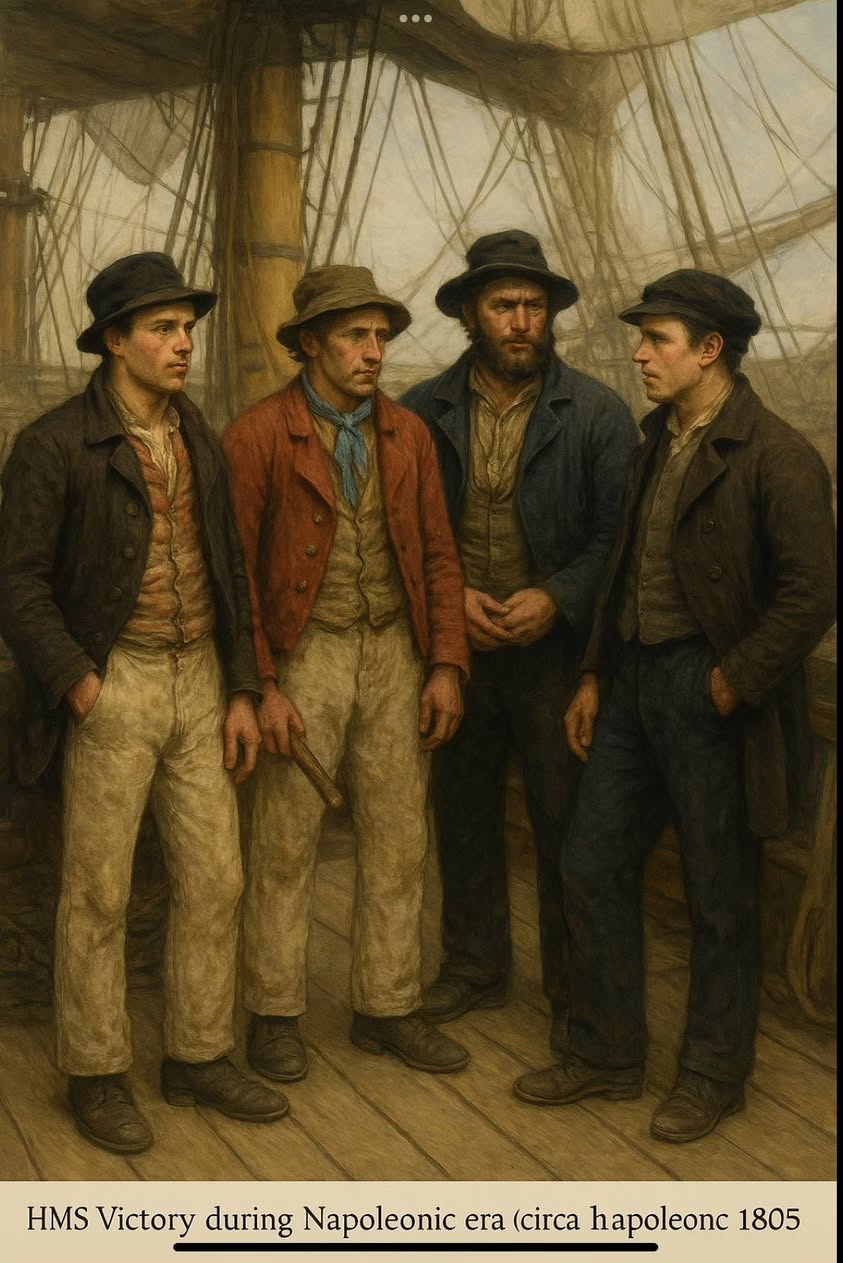
Thomas’s record of the Royal Navy ships on which he served is impressive, especially considering that he ultimately ran from the service on the 5th of September 1809 at Plymouth. The accompanying images further enrich this account: views of the Victory at Trafalgar, a representation of her hull with “100 shot stuck in our copper between wind and water,” period illustrations of Royal Navy sailors’ attire, and supporting crew lists and service records.
There is no trace of David, Thomas, or George Johns in the 1841 or 1851 Kidwelly census, yet the Johns surname remains present in the town today—leaving open the possibility that descendants of this remarkable seafaring family still live among us.
“Run from the Service”
During the early 19th century, desertion—often recorded simply as “run” in naval muster books—was a common and persistent problem in the Royal Navy. Despite strict discipline and harsh punishments, many sailors chose to flee their ships whenever the opportunity arose.
Several factors drove this high desertion rate. Pay in the Navy was significantly lower than in merchant service, and sailors often endured brutal discipline, cramped living conditions, poor food, and long stretches at sea with little leave. Many had been forced into service through impressment, making them even more likely to escape when possible. Annual desertion rates on some ships reached 10–20%, especially when vessels docked in foreign ports such as the United States or the Caribbean, where deserters could more easily disappear or find better-paid work.
The Navy tried to deter desertion through harsh penalties, including flogging, imprisonment, and in extreme wartime cases, execution. Yet the persistence of sailors “running” underscores the difficult conditions of naval life and the ongoing struggle of the Royal Navy to maintain its manpower during this turbulent era.